

Novel use of vegetation index and the emerging threats to European forests

Gustau Camps-Valls (iMIRACLI Supervisor, Image and Signal Processing (ISP) group, University of Valencia), has recently authored two articles involving vegetation and forests. 'A unified vegetation index for quantifying the terrestrial biosphere', published in Science Advances on 21st February, shows how use of a nonlinear normalized difference vegetation index (NDVI) will allow for more accurate measures of terrestrial carbon source/sink dynamics. Application of this method will provide new insights into the potential for stabilizing atmospheric CO2 and mitigating global climate change.
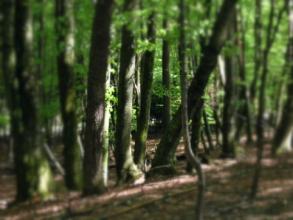
Wikimedia Commons (TadejM)
A second article, 'Emergent vulnerability to climate-driven disturbances in European forests' was co-authored by Gustau and published in Nature Communications on 23rd February. By integrating machine learning with historical forest disturbance data and satellite products, the authors estimated that about 33.4 billion tonnes of forest biomass could be seriously affected by fires, windthrows, and insect outbreaks. Interestingly, hotspot regions for vulnerability are located at the borders of the climate envelope in both southern and northern Europe. This shows a clear causal link between forest vulnerability and a warming-induced reduction in plant defence mechanisms to insect outbreaks, especially at high latitudes.
Both of these articles highlight the need for further refinement of the mechanisms used to quantify the health of forests and vegetation, and show how the combination of these mechanisms with machine learning techniques could vastly increase our knowledge of the stresses on the Earth's forests. This can only help to protect these unique ecosystems in the future, and we thank the authors for their work.