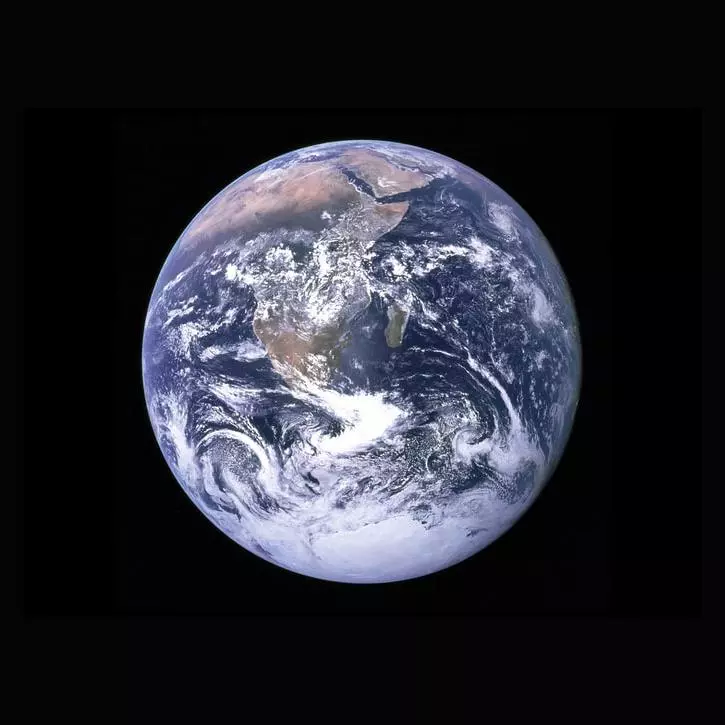

Which factors influence changing climate?
Imagine researchers would like to identify how strongly two or more phenomena affect each other. A model is then set up, but it turns out there are multiple ways to do it. Surprisingly, all of them will lead to correct results on average. Which one should the scientists choose?
The goal of this project is to answer questions like these. We aim to translate the choice problem into a simple task of looking at a graph.
It should allow a researcher to easily identify which alternative is the most sensible one, whenever lower variability is a desirable outcome. After all, the less ambiguity scientists face, the more their theory will be able to explain a certain phenomenon.
Causality research is a fundamental endeavor, foundational to science itself. Since the dawn of times, we try to understand how the world around us works, either through experimentation or observation. In order to know *how* or *why* something happens, we ought to be able to learn about the causal relations between different phenomena.
Let me give two examples, one in medicine and one in climate science.
Causal theory tells us how to carefully design experiments in order to gauge the effectiveness of a vaccine. Causality is also central for understanding under which circumstances the future climate can be predicted from weather observations.
Building upon previous research, the first step of this project is to extend existing theoretical frameworks for optimal causal effect estimation. Subsequently, research results will be tested against real world and made-up scenarios. Last but not least, we expect the results to be useful to fellow climate scientists at IMIRACLI as well as to the science community in general.